
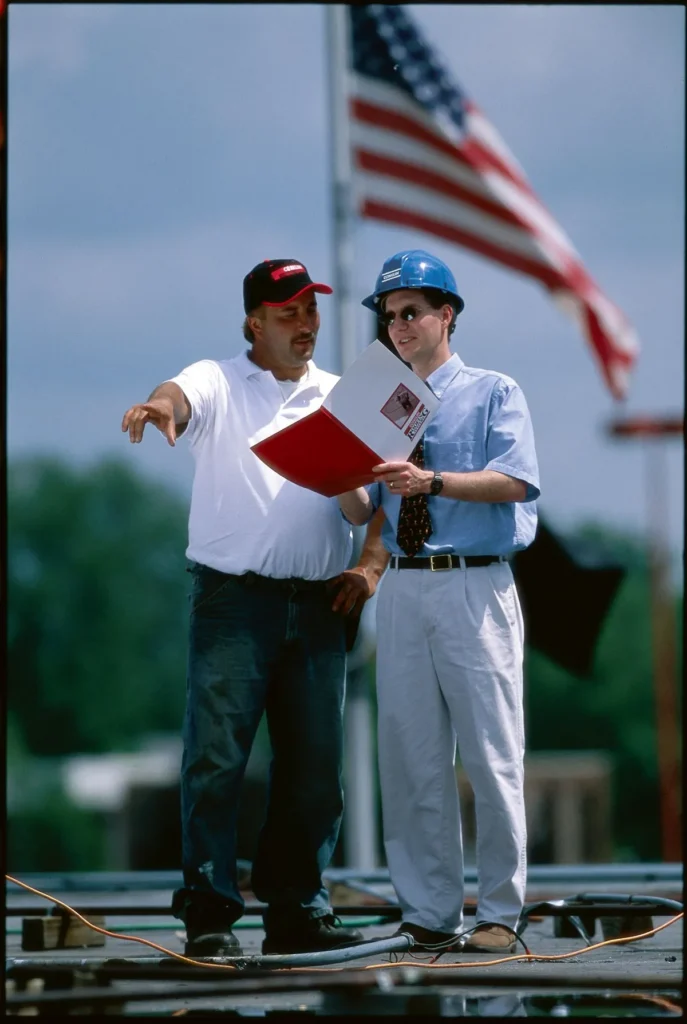
Property managers in Mechanicsburg’s office parks, retail centers and distribution buildings often look after several roofs at once, and almost never have time to climb onto any of them. That is what a commercial roof inspection is for. But not every inspection is equal. A quick walk and a verbal “looks fine” does not help you plan a budget, answer an owner’s questions or back up a warranty claim.
Here is what a useful commercial roof inspection should cover, and what the report you receive should include.
What the Inspector Should Check
- The membrane or roof surface: cracks, blisters, punctures, shrinkage, chalking and worn areas.
- Seams and laps: any lifting, open or poorly adhered seams on single-ply roofs.
- Flashing: walls, parapets, curbs, roof edges and expansion joints.
- Penetrations: pipes, vents, exhaust fans, skylights and equipment supports.
- Drainage: drains, scuppers, gutters and any areas where water ponds.
- Rooftop equipment: damage caused by service traffic and loose panels or debris.
- Moisture: signs of wet insulation under the surface, which is the single biggest factor in whether a roof can be repaired or restored.
- The interior: stains, active leaks and deck condition seen from below.
What the Report Should Include
- Photos of every issue, labeled so you can find each one on the roof.
- A roof plan or map showing where the problems are.
- A plain description of the roof system, its general condition and its likely remaining life.
- Prioritized recommendations: what needs attention now, what can wait until next season and what to watch.
- Options, not just one answer. Where a roof could be repaired, restored with a coating or replaced, the report should say so and explain why.
A report like this is something you can forward to an owner or asset manager and use to build next year’s budget.
How Often Should a Commercial Roof Be Inspected?
Twice a year is the usual recommendation: in spring, to catch winter damage, and in fall, to fix problems before snow and ice arrive. Add an inspection after any major storm. Many manufacturer warranties also expect owners to maintain the roof, and dated inspection reports are the simplest proof that you did.
Using Reports Across a Portfolio
For managers with several buildings, consistent reports make it easy to compare roofs side by side. Over two or three years, patterns show up: which roofs are stable, which ones need a maintenance plan, which are candidates for a restoration coating and which should be planned for replacement. That turns roof spending from a string of emergencies into a plan.
Do You Need to Be There?
No. A good inspection can be done without the owner or manager on site, as long as the inspector can reach the roof. The findings are reviewed with you afterward, with the photos in front of you.
Learn more on our commercial roof inspections page, or see how we work with office parks and retail centers on our Mechanicsburg commercial roofing page.
Get a Straight Answer About Your Roof
Double H Commercial Roofing works with building owners and property managers in Mechanicsburg and across Central Pennsylvania. Every evaluation is free, photo-documented and comes with honest options. Call 814-380-8978 (Monday to Friday, 8 AM to 8 PM) or request your free roof evaluation.